


Both materials work for pick face storage. The right choice depends on your environment and how often your layout changes, not brand preference.
At a glance
| Factor | Cardboard bins | Plastic bins |
| Upfront cost | Lower | Higher |
| Weight when empty | Lighter, easy to handle and move by hand | Heavier |
| Moisture resistance | Poor, keep away from damp or wet areas | Good |
| Recyclability | Fully recyclable as cardboard | Recyclable, but often mixed material, harder to process |
| Assembly | Flat packed, built by hand in seconds, no tools | Usually arrives pre molded, no assembly, but bulkier to ship and store before use |
| Typical lifespan | At least two years in dry conditions, per PALLITE’s own product guidance | Longer, holds up to repeated reuse over many years |
| Reconfiguring your layout | Fast and cheap, units are lightweight and quick to rebuild elsewhere | Slower and costlier, units are heavier and not designed to be disassembled |
Cost and space
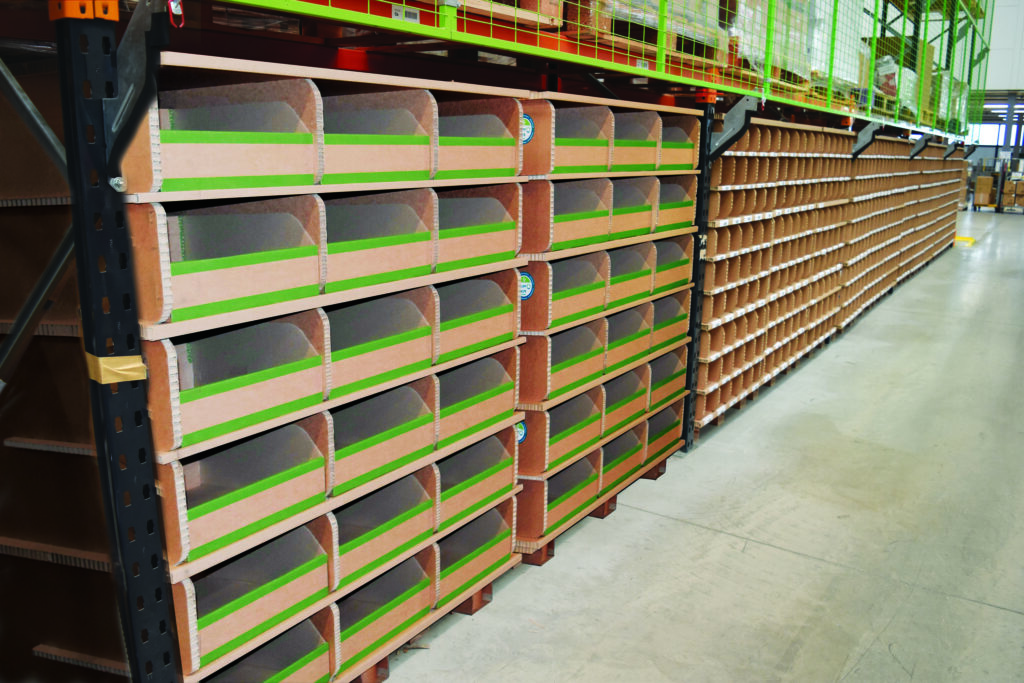
The gap in upfront cost is mostly a manufacturing story. Corrugated and honeycomb cardboard is cheaper to produce and ship flat, plastic needs molding equipment and arrives already formed, which pushes the price up and the delivery footprint up with it.
That flat pack delivery matters more than it looks on paper. A pallet of flat packed cardboard units takes up a fraction of the space of the same number of pre molded plastic bins before either is even assembled, which affects goods in space as much as it affects the invoice.
Handling and durability
Weight is the most immediate difference on the warehouse floor. Cardboard units are light enough to move and rebuild by hand, plastic bins generally need more effort and sometimes equipment to shift once loaded.
Durability is where cardboard’s reputation gets ahead of the actual material. One US fulfilment operator had been running standard corrugated bin boxes that broke down within two to three years under continuous picking. Moving to a honeycomb cardboard system solved the durability problem without needing to switch materials at all, the issue was the grade of cardboard, not cardboard itself. Standard corrugated and honeycomb board are not the same product, and it is worth knowing which one a quote is actually offering.
“PIX® is the perfect, fast build, easy to access solution for companies looking to maximise their space and improve picking efficiency.”
Kuehne + Nagel
PALLITE’s view: cardboard does not need to be treated as the compromise option. In dry warehouse conditions it does the job as well as plastic, and it flexes with a changing layout in a way molded plastic never will.
Sustainability
This is the clearest point of difference. Cardboard is fully recyclable as a single material. Plastic bins are recyclable too, but they are often built from mixed polymers or combined with metal fittings, which makes them harder to process at end of life than a single material cardboard unit. Where it matters for supplier reporting, PALLITE’s cardboard is also produced from materials sourced from managed forests, which is a separate point from recyclability but often shows up in the same procurement conversation.
The real cost over time
Upfront price is only part of the total cost. Over a few years, a few other costs tend to matter just as much.
Replacement frequency works against cardboard on paper, a unit rated for a minimum of two years in dry conditions will need replacing sooner than a plastic bin kept in the same environment. It works back in cardboard’s favour on price, since replacing it costs less and can be done from flat stock rather than reordering a molded part.
Reconfiguration tends to be the bigger factor in practice. Every time a layout changes, cardboard units can be taken apart, moved, and rebuilt by hand at effectively no extra cost. Plastic bins are heavier to move and were not designed to be broken down, so a layout change often means buying new bins rather than relocating the old ones.
Disposal is the last piece. At end of life, a single material cardboard unit is straightforward to recycle. Plastic bins, particularly ones with metal fittings or mixed polymer components, cost more to process responsibly.
Add these up over three to five years, especially in an operation that changes its layout even once or twice in that time, and the total cost gap between materials narrows or reverses compared to what the upfront price alone suggests.
Using both materials in the same warehouse
Few operations need to pick one material for the entire site. Cardboard suits pick faces inside a dry, actively managed area where the layout might change as SKUs are added or seasons shift. Plastic still earns its place in goods in or goods out areas exposed to moisture, or in zones with a fixed layout that has not changed in years and is not expected to.
Choosing per zone, rather than per warehouse, usually gets more value out of both materials than committing to one everywhere. A seasonal fulfilment operation is a good example, cardboard pick faces that can be added to quickly ahead of a peak period, alongside a fixed plastic setup in a goods in area that never changes shape.
Which one suits your operation
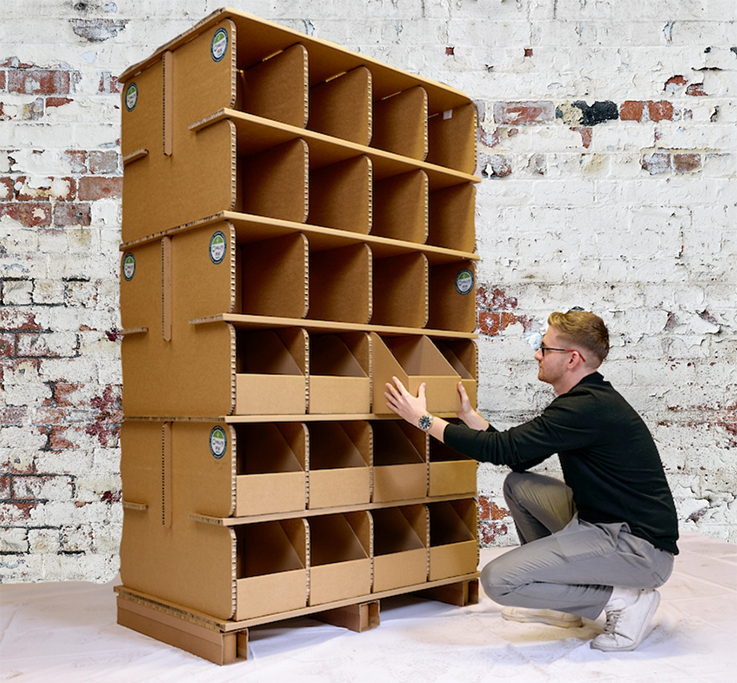
Choose cardboard storage drawers if your warehouse is dry indoors, your SKU mix changes often enough that you will want to reconfigure or add capacity quickly, or full recyclability matters to your buying decision. A fast growing ecommerce or fashion operation adding new SKUs every season is a typical fit, since the units can be rebuilt or added to without downtime.
Choose plastic if you are storing in a damp or outdoor adjacent area where moisture is a real risk, or your layout is fixed for the long term and reconfiguration is not something you expect to need.
FAQs
Is cardboard strong enough for warehouse picking? Yes, within the right conditions. Honeycomb cardboard systems such as PALLITE PIX are rated up to 500kg per unit depending on the range, which covers most pick face use cases. The failures that give cardboard a bad reputation usually involve standard corrugated board, not honeycomb construction.
How long do cardboard storage bins last? PALLITE’s own guidance puts its cardboard units at a minimum of two years in dry conditions. Lifespan drops sharply if the board gets wet, so keep them away from moisture.
Can cardboard bins be used outdoors or in damp areas? No. Water or humidity weakens the board over time. Plastic is the better choice for those environments.
Is plastic always more durable than cardboard? Not automatically. Plastic generally resists impact and moisture better over a long lifespan, but a well built honeycomb cardboard system in dry conditions can match plastic for the two to three year window most warehouses are actually planning around.
Does it make sense to use plastic and cardboard in the same warehouse? Often, yes. Matching the material to the zone, dry and frequently reconfigured areas on cardboard, damp or fixed layout areas on plastic, tends to get more value than standardising on one material across the whole site.
